
Recently we told you why modern synthetic engine oils are better than their mineral counterparts. It’s all thanks to their multifaceted properties and ability to retain performance under demanding conditions.
Because of this, synthetic oils can adjust their viscosity index on their own without the need for additional additives. But you may be wondering if they have other differences that make them superior? Let’s discuss each type of engine oil in more detail and identify their characteristics.
Mineral Engine Oils
They are also called conventional or “mineral‑based,” as their composition includes hydrocarbons derived from crude oil. Typically, they are perceived as lower quality.
However, we want to tell you that they also have their advantages.
The primary advantage is, of course, the price. Producing mineral oil is not costly, as these oils are obtained from relatively abundant raw material. Because little investment is required for their production, the price remains low.
Also, due to the nature of oil, it tends to operate only within a certain temperature range, which limits its potential. This characteristic prompts manufacturers to add additives to such oils so they can be used in more extreme conditions (temperatures).
Another common consideration is that mineral oils, because of their faster wear, need to be replaced more often.
This statement is not entirely accurate.
Although these oils degrade faster due to oxidation, the specifications and standards for both mineral and synthetic oils are the same. Therefore, for a mineral oil to meet a given specification, it simply needs to endure the same conditions as a synthetic oil with that specification.
In conclusion, vehicles can easily use either type of oil – it all depends on the recommendations for your model.
Also, if you would like to learn more – see our article on engine oil specifications.
This also means that the oil change interval can be the same for both types – either in kilometers or in time, as specified by the vehicle manufacturer.

Synthetic Oils
In addition to the ability to change their viscosity index depending on temperature, synthetic oils also have other advantages.
The most important among them is the near‑complete absence of aging or degradation of synthetic oils. This results in safer and more stable operation, and also ensures no residues or sludge in the vehicle’s system. In turn, this leads to better protection of vehicle components from wear throughout the lifecycle.
It should also be remembered that mineral‑base oils, even with added additives to improve the viscosity index, still cannot demonstrate superior performance in extreme conditions.
IMPORTANT!
Synthetic oils perform better in resisting thermal breakdown and evaporation, and they are also thinner at low temperatures. That’s why low‑temperature oils such as 0W20 or 5W30 are usually synthetic.
To summarize what characterizes synthetic engine oils, we can say the following:
- Better performance in extreme (high‑low) temperatures.
- Help keep the engine clean from deposits and residues that can reduce the efficiency of vehicle systems.
- Provide better protection against engine wear and its components.
Semi‑Synthetic Oils
As you probably suspect, semi‑synthetic oils are a blend of the two aforementioned oil types. They are sometimes called hybrid oils.
Semi‑synthetic oils obtain all the advantages of synthetic oils without the drawbacks of mineral oils. This means we get the best performance under extreme conditions, although the oils are not as robust as fully synthetic ones. Typically, winter‑grade oils such as 10W50 and 15W40 are either hybrid or even mineral, because with the right additives they do not fall short of fully synthetic oils.
It should also be noted that the price difference between synthetic and semi‑synthetic oils is noticeable. Overall, semi‑synthetic oils are a more affordable solution.
Xenum offers a fairly wide selection among semi‑synthetics:
Engine oil for trucks XENUM DIESEL SYNTH 5W30 E4/E7
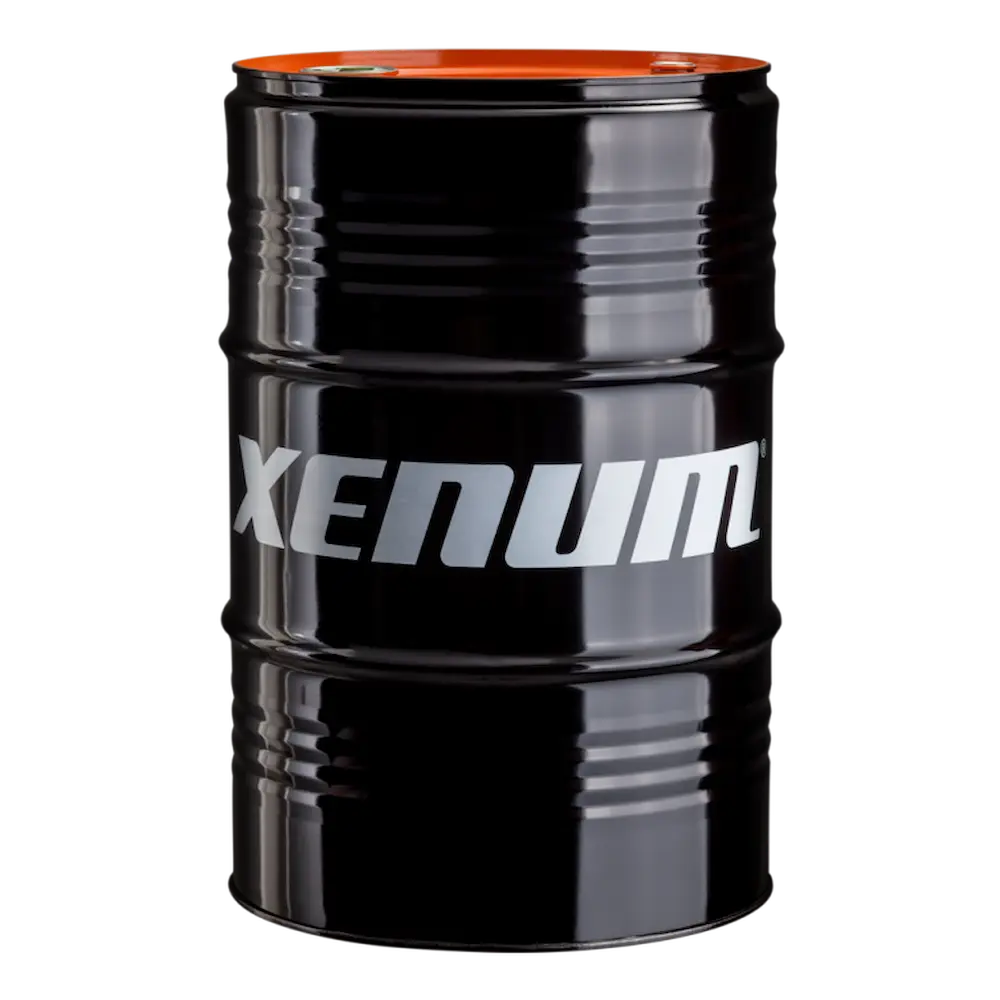
Truck engine oil XENUM DIESEL POWER 10W40 E6/E7/E9/E11
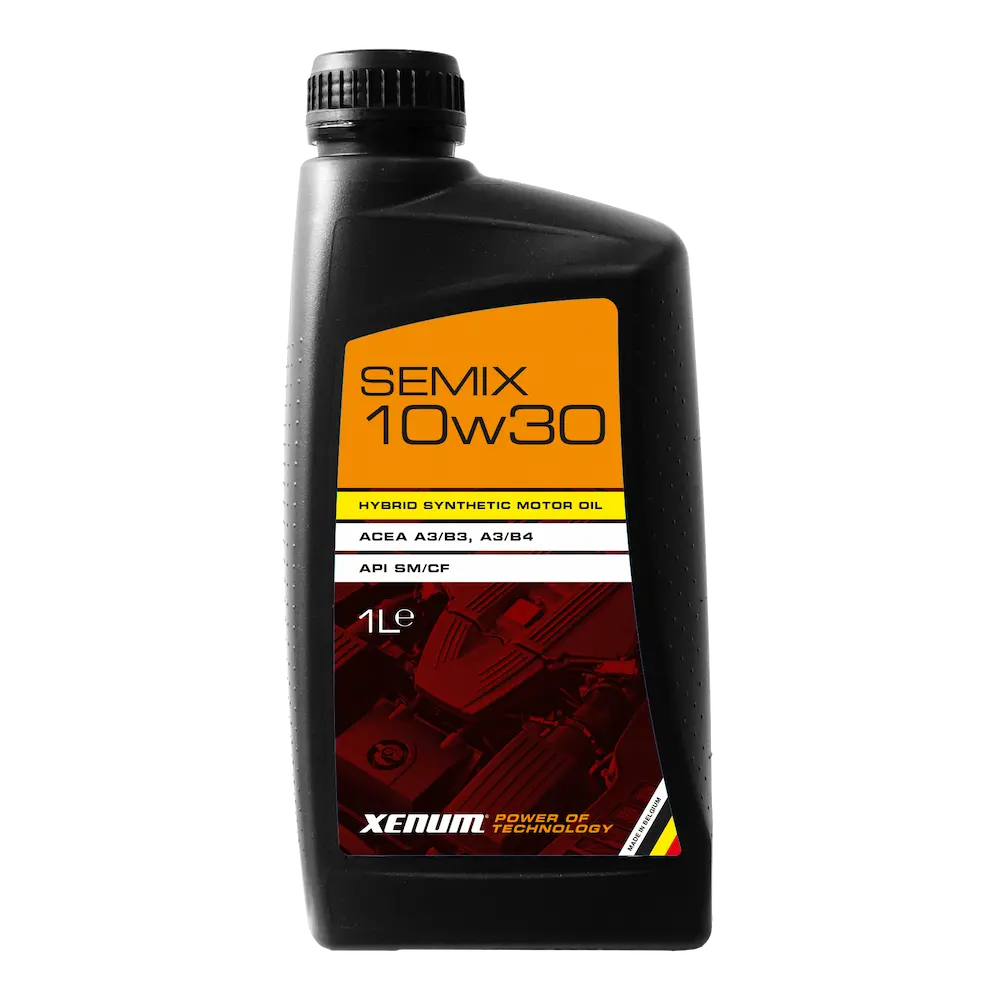
Professional hybrid engine oil XENUM SEMIX 10W30
For a responsible driver who cares for their car and changes the engine oil when needed, the difference can be almost imperceptible in terms of reliability and performance at high temperatures, or in the wear of vehicle components. However, if your car is under daily load and you want to keep it in top condition – the right engine oil should be on your list of solutions.
That is what we can conclude.
Next time we will tell you how additives can enhance the capabilities of engine oils.
Respect your car! Stay connected for new tips and interesting information!