In our recent articles we have often raised the topic of what oils are and how they work, and how they can be mixed with additives to address real‑world problems. Even synthetic, artificially created oils require additives, but in their case this helps keep engine parts clean and operate as efficiently as possible. Of course, using additives in operation is a better solution than filling with only base oil.
You might think that once additives were invented, there is no room for improvement. However, we offer another revolution – additives with nanoparticles.
Today we present Molybdenum (Molybdenum disulfide – MoS2) and discuss its use in Xenum additives.
Origin of the key properties
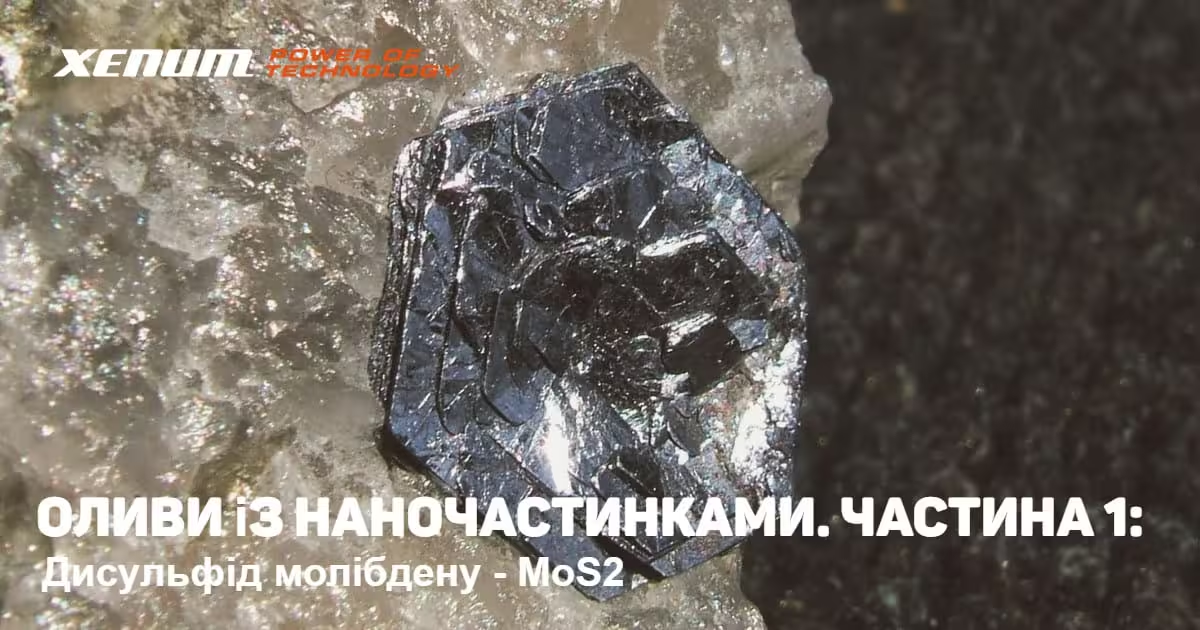
In the periodic table of elements, Molybdenum is classified as a metal. Its natural form can be identified as molybdenite (molybdenite), also called molybdenum disulfide or MoS2.
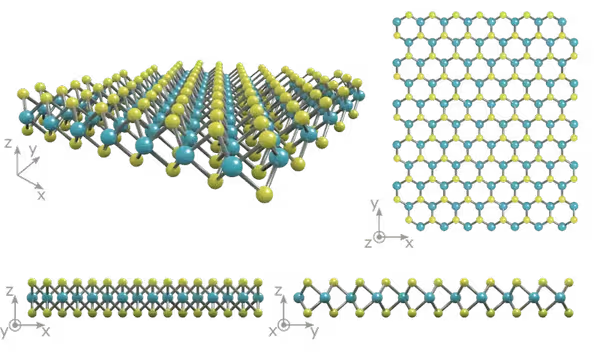
All forms of molybdenite have a layered (stratified) structure, which makes this mineral an excellent lubricating material. Moreover, the ability of molybdenite to stretch is proportional to the friction force. As friction on molybdenite increases, it can elongate without loss of properties or useful functions. This characteristic is known as super‑lubricity.
Impressed? More to come!
Use of molybdenum in additives
Thanks to its friction‑resisting capability, liquid molybdenum is a fairly common component among additives. MoS2 particles, about 1–100 µm in diameter, can retain high lubricating properties and structure at elevated engine operating temperatures. This is, without doubt, an advantage.
Typically, this component is added with graphite to improve the oil’s ability to adhere to vehicle parts. Precisely because of its ability to retain lubricating properties under supercritical conditions, you can learn about the use of molybdenum‑based oils in aircraft engines.
Molybdenum (MoS2) also often serves as a catalyst in the petrochemical industry.
And now you can also harness this Power!
Molybdenum & Xenum
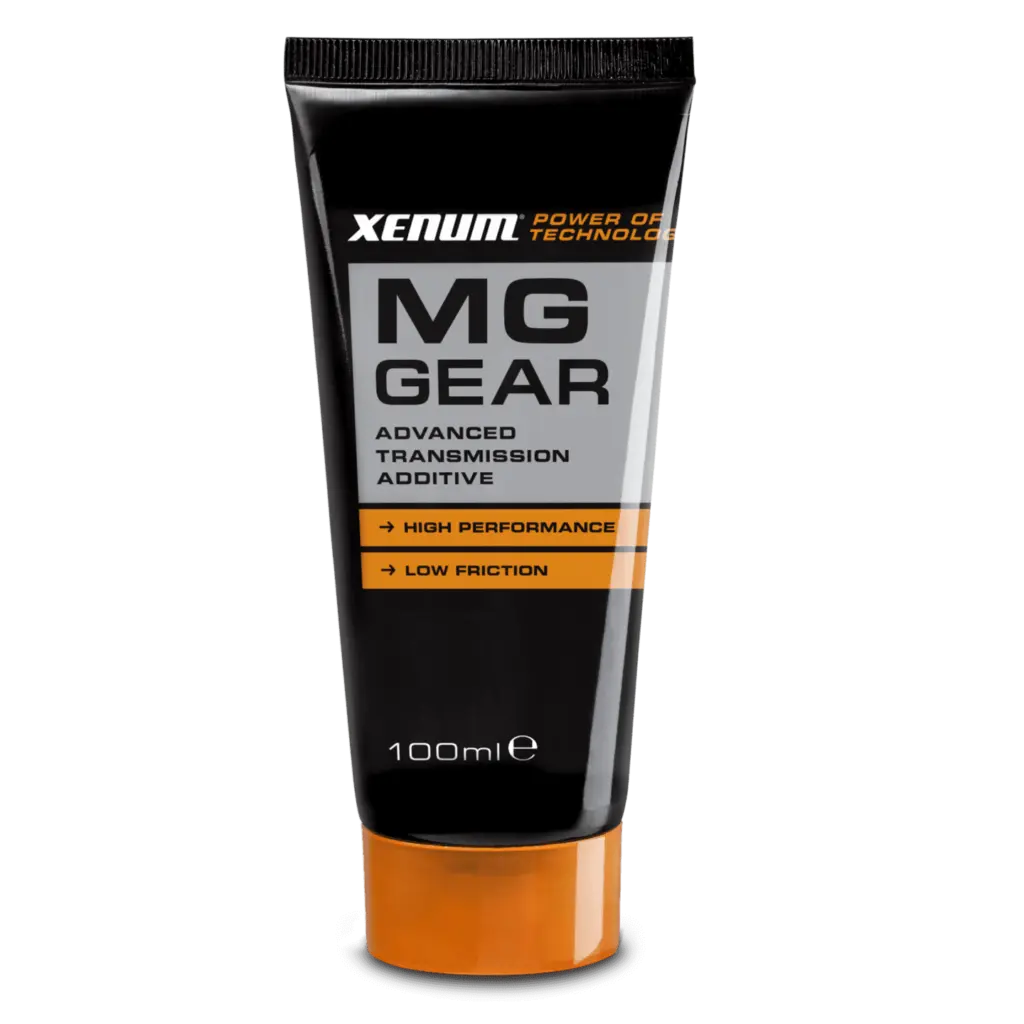
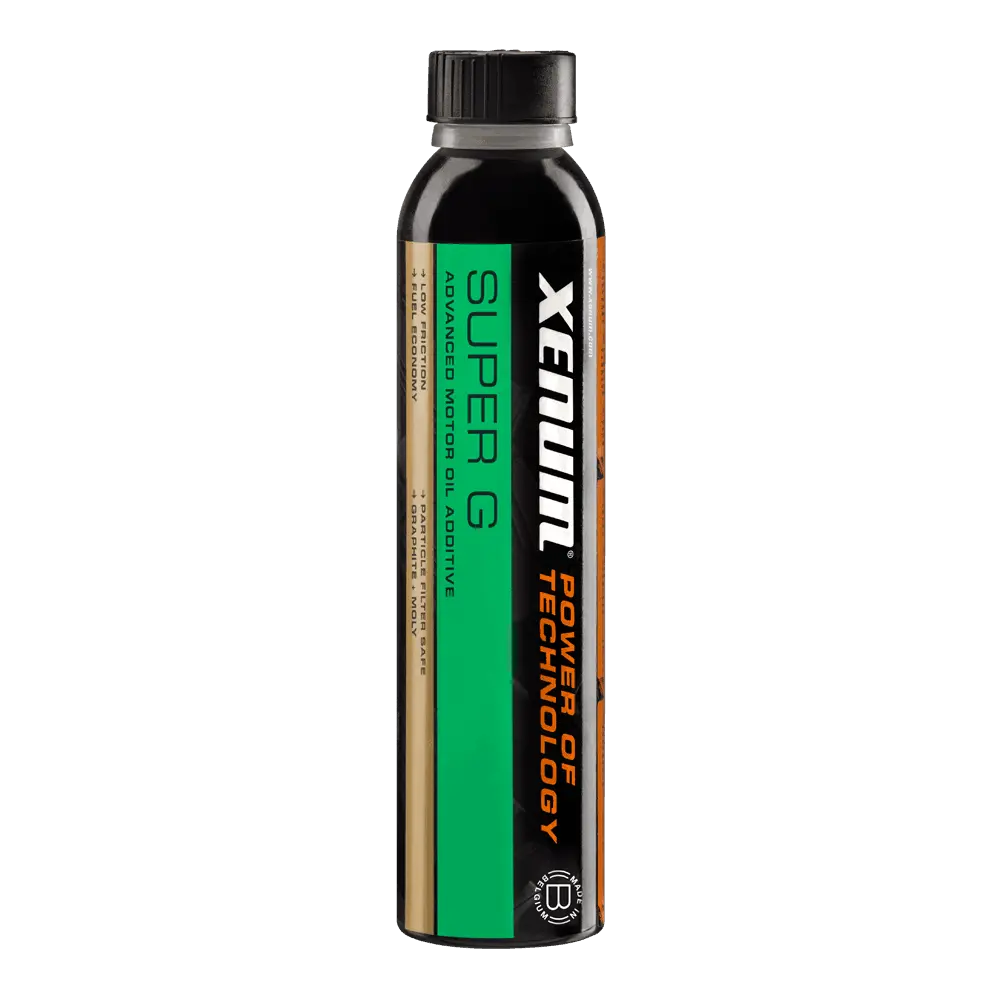
Among our products we can highlight two molybdenum‑based additives. These are Super G and MG Gear, whose goal is to reduce friction in critical areas of the vehicle: the engine and transmission.
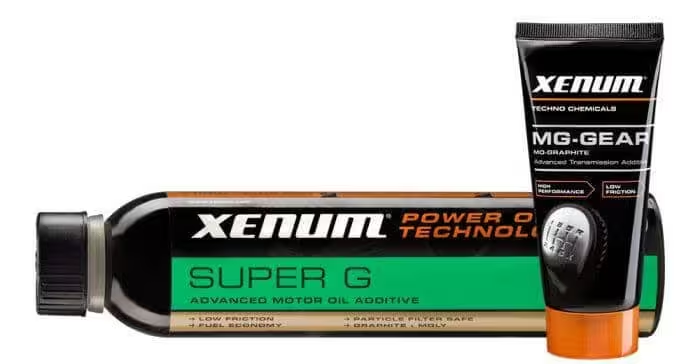
In both cases molybdenum is present in a compound with carbon‑graphite (carbon graphite), which is often used in nanoparticle additives. We will continue developing this topic in upcoming articles…