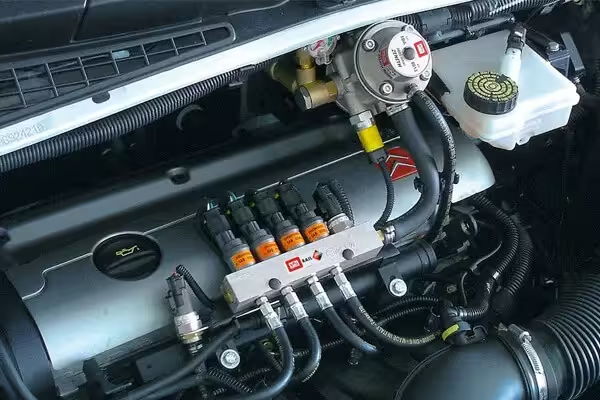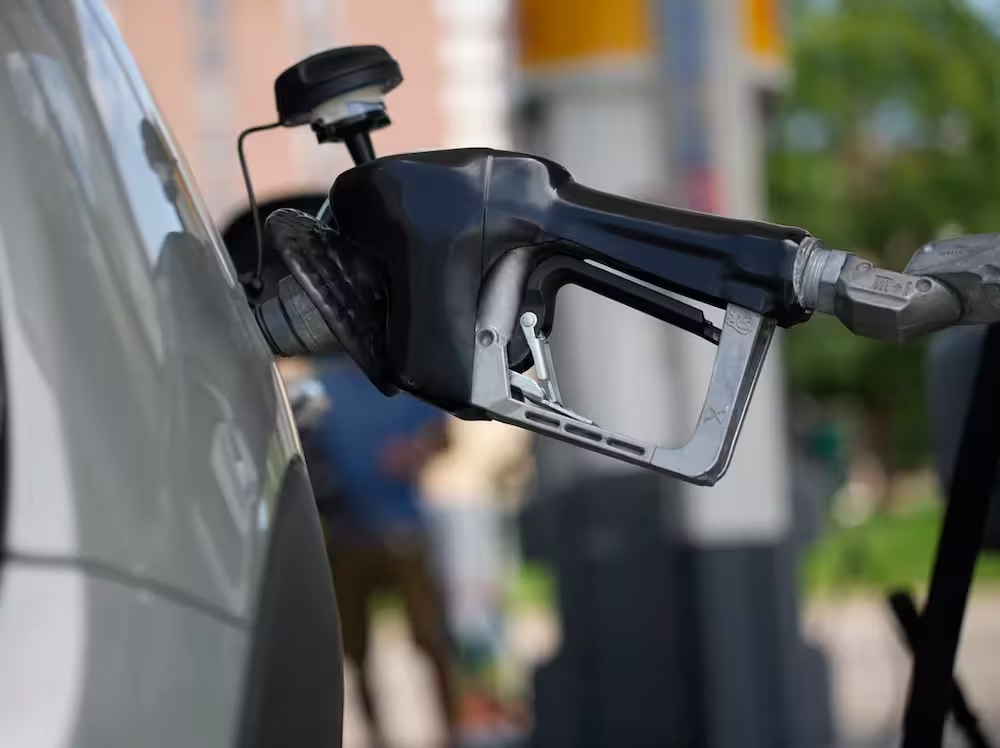
CNG equipment (CNG) is an effective and economical solution for many car owners, but like any technology, it requires proper maintenance and attention to possible faults, including gas leaks. In this article we will share tips on detecting and fixing such faults. For solving specific problems we recommend contacting our representatives.
Common problems with CNG
The most common problems with CNG often arise either from poor‑quality equipment or from lack of or inadequate maintenance. The most frequent issue that motorists usually point out is gas leaks when using the CNG system.
Gas leak
Having a CNG system in a vehicle does not mean that the smell of gas should be constantly noticeable. If you detect the odor in the cabin or while standing near the gas cylinder, it indicates that the CNG settings are incorrect or that there is a breach of sealing and integrity of the installed gas equipment.
Signs of leaks in the CNG system:
- Gas odor – The most obvious sign of a gas leak in a vehicle is the smell. If you notice a gas odor around the vehicle or in the cabin, it is a signal for immediate action.
- Increased fuel consumption – Unexplained rise in fuel consumption can be a sign of a leak, as the system loses gas.
- Leak sounds – Listen for any whistling or hissing noises from the CNG installation area, which may indicate a leak.
Resolution:
- System sealing check: It is important to regularly inspect all connections and hoses for leaks.
- Replacement of damaged components: If a leak is found, damaged hoses or fittings must be replaced immediately.
Types of gas leaks
First, you need to identify the cause of the gas odor, starting with the exhaust pipe. If you notice a characteristic gas smell instead of the usual burnt‑fuel odor, it indicates that the equipment is incorrectly tuned – fuel combustion is complete, and it is expelled together with exhaust gases through the exhaust pipe. Fixing such a fault yourself is unlikely. Qualified technicians and special equipment are required to connect to the CNG system and check the operation of all software settings as well as the functioning of all auxiliary devices.
If a gas odor is observed in the vehicle cabin, it means a leak has appeared in the fuel system and most likely a full system diagnosis is required. Driving a vehicle with such faults is prohibited, as it can lead to tragic consequences.
How to locate gas leak points in a vehicle with CNG
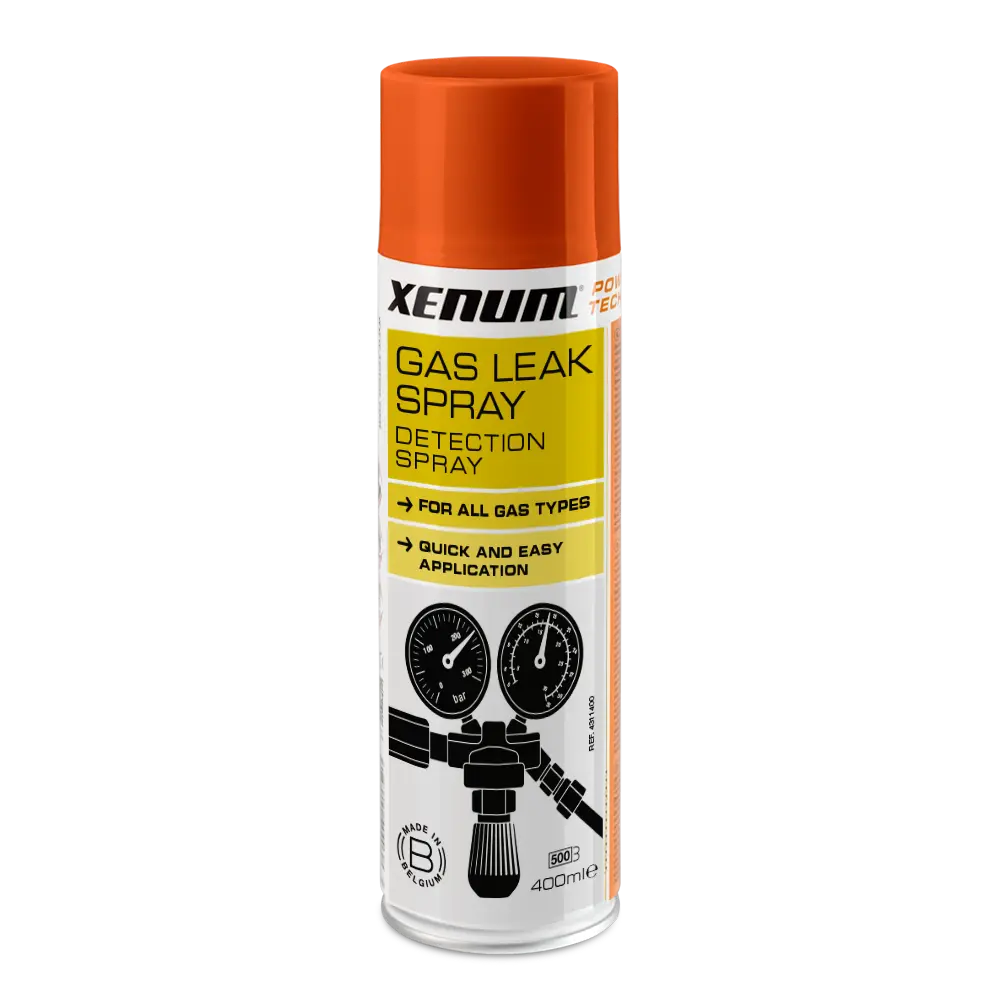
There are several methods to identify gas leak locations yourself. The most accurate, reliable and safe is the mechanical method, which involves applying a special solution to pipe joints, threaded connections and other coupling points. If bubbles appear – that is exactly where the leak is.
XENUM recommends using the product GAS LEAK to locate leak points in CNG systems and resolve this issue.
Other common faults and their resolution
Unstable engine operation
Symptoms:
- Engine runs unevenly on gas.
- Reduced vehicle power.
Solution:
- Adjustment of the LPG system: The system may need recalibration to ensure optimal gas delivery.
- Cleaning or replacement of injectors: Dirty or worn injectors can cause unstable engine operation.
Engine start problems
Symptoms:
- Difficulty starting the engine when switching to gas.
- Engine starts only on gasoline.
Solution:
- Check the reducer: The reducer may require repair or replacement.
- Electronic diagnostics: Possible issues with electronic components of the LPG system that require diagnosis and adjustment.
Increased gas consumption
Symptoms:
- Significant increase in gas consumption without a change in driving style.
Solution:
- Seal check: A gas leak can cause increased consumption.
- Gas flow adjustment: The system may need recalibration for optimal operation.
Check Engine light illumination
Symptoms:
- Check Engine indication on the instrument panel.
Solution:
- Computer diagnostics: Performing diagnostics to determine the cause of the light.
- Check LPG settings: Possible system recalibration to clear the fault.
Consult professionals
Although some basic checks and maintenance can be performed independently, we strongly recommend contacting professionals when gas leaks or other serious faults are detected. Professional service centers have the necessary equipment and expertise for safe and effective problem resolution.
Regular maintenance and attention to the condition of your LPG system will ensure its reliability and safety. Do not ignore signs of problems and always aim for professional service, so your vehicle remains safe and efficiently uses gas as an alternative fuel.