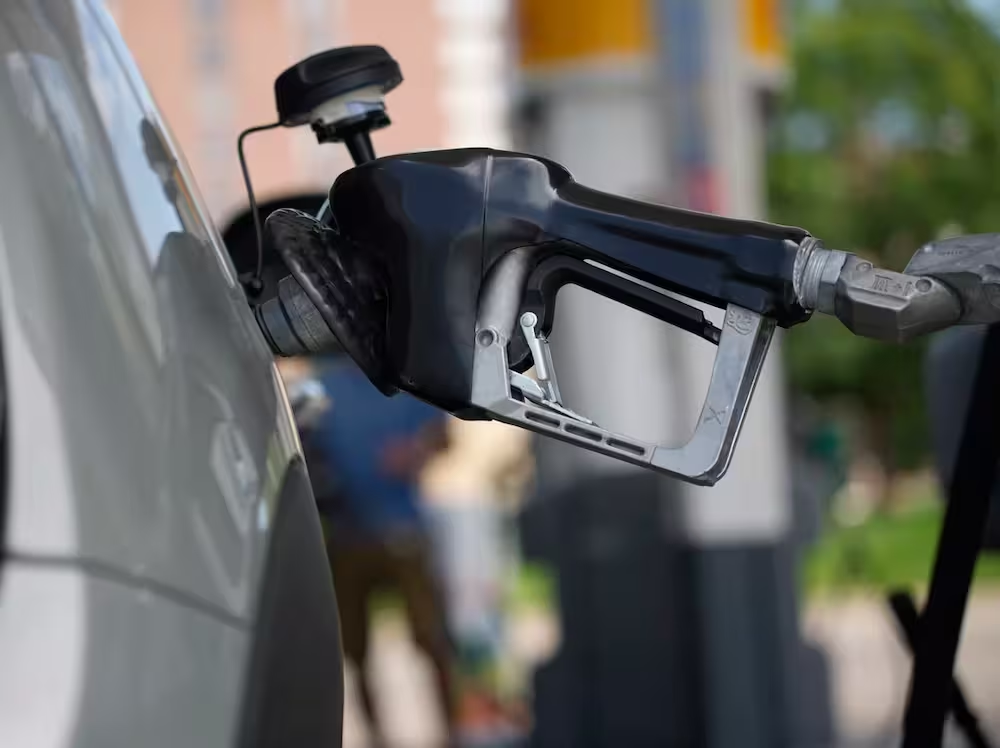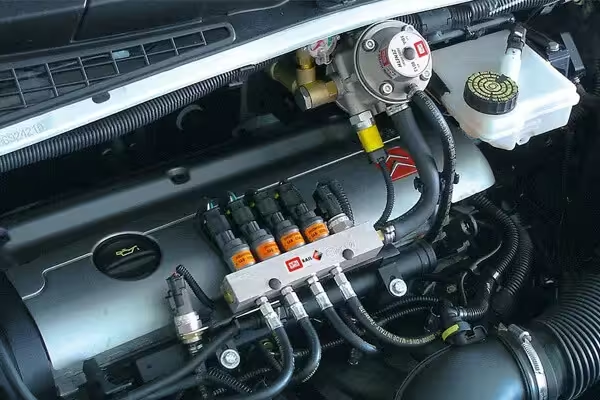
Drivers' eyes have already become accustomed to expensive off‑road vehicles “Land Cruiser”, “Range Rover” or “Mercedes‑Benz” at LPG stations. Why do even wealthy motorists convert their cars to “gas”?
The kits can be Chinese, Baltic, Polish, and the best are considered Italian.
What is gas equipment for a car (GBO)
Gas cylinder equipment for automobiles is a system that uses propane or methane LPG / CNG as an alternative fuel type for vehicles equipped with internal combustion engines.
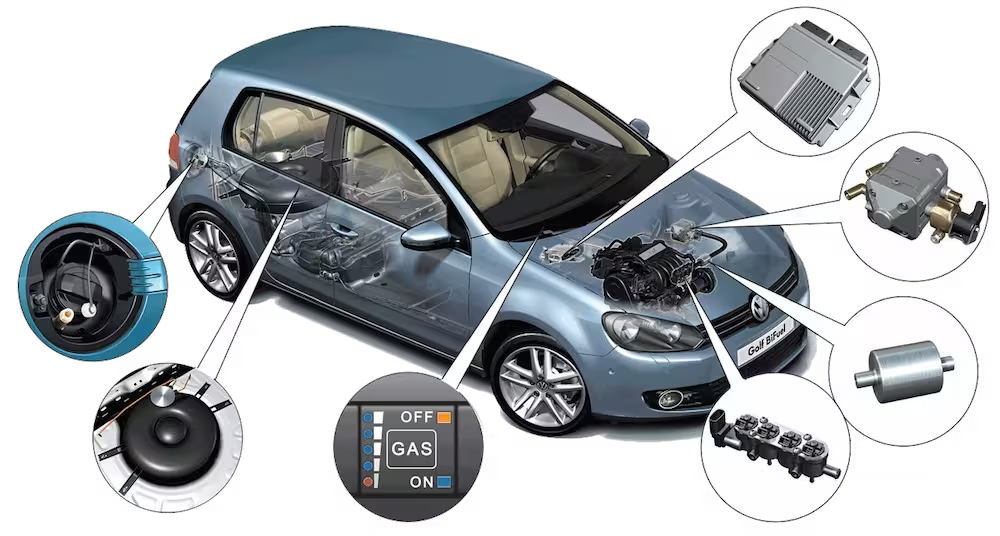
Gas equipment for automobiles is installed in three locations of the vehicle: the trunk, the engine compartment, and the passenger cabin. In the trunk are gas cylinders intended for storing the gas supply. Methane cylinders (compressed gas) are made of special steel and have no seams. Propane cylinders (liquefied gas) are welded and can have a cylindrical or toroidal shape. Gas cylinders are designed for very high gas pressures.
Special valves and regulators are used for filling gas cylinders, as well as for blocking and delivering gas to the main line.
Gas reducer
A component of the car’s gas equipment that serves to convert gas from the liquid phase to vapor, as well as to heat compressed natural gas. In addition, the gas reducer lowers the pressure of the gas supplied from the cylinder. Another function of the LPG reducer is that it regulates the amount of gas entering the mixer. This occurs depending on changes in load or the engine crankshaft speed. The final function of the gas reducer is to shut off gas flow when the engine stops or when switching to gasoline.
Gas mixer
A component of the car’s gas equipment designed to mix gas and air (preparing the working gas mixture).
Electromagnetic gas valve (EGK)
Designed to supply gas to the gas reducer, as well as to shut off gas when the vehicle runs on gasoline. (The gas electropanel is controlled via a switch from the cabin). The gas valve contains a filtering element that cleans the gas of mechanical contaminants. This element of the car’s gas equipment should be replaced every 10–15 thousand kilometres of vehicle mileage.
Electromagnetic fuel valve (EKB)
A component designed to supply gasoline to the vehicle’s carburetor when the gas supply is shut off. Equipped with a manual open/close valve.
Fuse
Located in the holder, it protects the EGK and EKB from failures.
Power register
Located on the low‑pressure gas pipeline, it connects the gas reducer and the gas mixer and feeds gas to the carburetor chambers. The gas dispenser has adjustment screws that regulate the amount of gas entering the mixer.
The control of the vehicle engine’s operating modes is performed via a fuel type selector switch located in the vehicle’s cabin on the instrument panel.
——-
Over time, the car’s gas equipment may start to work inefficiently and a gas odor may appear, even if the connections are fully sealed.
To address these issues we recommend reviewing our next article.