If you have a 3‑5‑year‑old “Korean” mass‑market model sitting in your garage or parking lot, then, as a rule, there is no need to think about the oil brand you pour into it. The requirements of a standard engine and its owner’s wallet are fully satisfied by the mass‑market products available on the market. However, in any segment (and motor oils are no exception) there is always room for niche products intended for special connoisseurs, i.e., produced by fans for other fans. Such products include Xenum brand oils, little known among ordinary car owners, but they have literally blown up the forums of racing and turbo‑car enthusiasts.
As is typical, any new product first provokes consumer distrust. Especially if it does not carry a loud manufacturer name, the oil colour resembles either “condensed milk” or resin, and the price… 70 euros for 5 litres triggers obvious surprise: to justify its price, the product must have truly unique properties! So, where is the catch? Why hasn’t this brand died in its first year of existence, as marketing and sales manuals predict, when many far more famous brands compete for an extra 20 UAH per canister at retail? It is unlikely that a universal recipe for success can be derived here, because it, like the recipe of the oil itself, consists of many components. Let’s probably start from the very beginning, namely – with the one who created it.
When telling the history of a brand or motor‑oil manufacturer, we usually talk about a corporation or, less often, a single enterprise. In this case everything happened differently than we are used to, and the story of the brand boils down to the life experience of one person – the Belgian Peter Tössin. He is the owner of the Xenum company and the eponymous trademark under which a wide range of oils, lubricants and automotive chemicals are produced. Educated as an electromechanical engineer, he worked for more than 20 years in the petrochemical industry. This includes serving as director and co‑owner of Marly, founded almost 100 years ago and one of the first companies that developed ester‑based oils, with the addition of colloidal graphite and micro‑ceramics. After selling his partner his 50 % share, in 2004 Peter Tössin founded his own company Xenum and continued work in the well‑known direction. As often happens in life and business, the separation did not pass without mutual accusations, so the court case about the “divorce” still has no final dot, which, however, does not prevent Xenum from successfully conquering its market share. And the demand for an expensive high‑technology oil product, it must be said, does exist, because it is not without reason that Marly, which showed confident growth after Peter Tössin arrived there in 1998, eventually went bankrupt. And still, Xenum is not Marly…
If, when thinking about modern high‑technology oils, you picture a closed‑door enterprise and a series of laboratories equipped with the latest technology, you will probably have to change your stereotypes. Peter Tössin’s company is a team of seven people, including himself, located in a small two‑storey building on the outskirts of Brussels. According to him, creating a good oil does not require many people. It is enough to take the best ingredients in the right proportion. In short, our time is the time of the Idea, not of Production. Because to make a quality product, it is sufficient to place an order with one of the existing oil‑blending facilities, for example the Dutch De Oliebron, where together with Xenum small batches of top‑tier products from other brands are filled.
The core of the Xenum oil Idea is a super‑premium base made from complex esters, called esters. Unlike hydrocracking or even PAO, which require the presence of viscosity improvers that activate over time, an ester can be synthesized across a wide viscosity range. Moreover, the negative charge of their long molecules makes the oil adhere to the metal walls of the engine, forming a strong film that provides improved anti‑wear properties. Knowing this property of esters, one can even believe the story of a forum user who tested Xenum: after punching a 13 cm hole in the crankcase in the remote Yakutian depth (so the oil drained completely and without residue!), he drove 25 km “on dry” to the nearest service station without any particular engine consequences. Thus, what is excessive in normal operation is simply necessary in motorsport and comes to the rescue under peak loads. Whether it’s a hard launch, prolonged idle, or “slipping the clutch,” they occur practically with every driver.
As for the formulas, Xenum in terms of esters takes the route of purchasing the solution from one of the industry leaders – Croda. Other base components are formed from Mobil’s refinery base oil and the excellent hydrocracking oil XHVI from Shell. The graphite additive and micro‑ceramics (Xenum product features) are sourced from the Henkel group, and the ready‑made additive package recipes that have passed all tests and received automaker approvals are from Oronite and Lubrizol. One can anticipate the naturally arising question: if the esters are so good, why don’t other oil manufacturers use them? Prominent global manufacturers use esters in their top products at levels of 1 to 20%. This simply isn’t the basis of a marketing campaign, so the fact remains “off‑camera”.
Engine Menu
Today, Xenum oils are divided into three lines: for extreme operating conditions based on esters and micro‑ceramics; enhanced oils with graphite addition, but cheaper compared to ceramics; classic oils that are among the best in their class.
Main Dish
The core Xenum oil line for passenger cars includes a range of synthetic and semi‑synthetic engine and transmission oils for passenger and commercial vehicles, of which only one contains esters – X1 5W-40 Ester Hybrid synthetic motoroil. It was developed based on cutting‑edge technologies specifically for ultra‑modern gasoline and diesel Euro IV engines with a diesel particulate filter (DPF) and a NOx storage catalyst (TWC). At the heart of X1 oil is a specially selected synthetic base oil with 10 % esters and a well‑balanced additive complex. Thanks to its special composition, the oil fully meets the MV 229.51 specification and BMW LongLife‑04.
The other oils in this group are formulated from specially selected synthetic base oils and a well‑balanced modern additive package. Their distinction lies in their intended application. For example, the classic Xenum range includes an OEM‑Line series. This product line is developed for vehicles with specialized approvals as a response to manufacturers’ recommendations to use original oils. Recently, a trend has emerged toward low‑viscosity oils and many manufacturers are shifting to 5W‑30 oils. However, for an oil to perform its characteristics, the manufacturer must also consider the climate in which the vehicle operates. Therefore, in addition to 5W‑30, an oil with 0W‑20 viscosity is also offered, intended for operation in harsh climates and extremely low temperatures. It is suitable for most Japanese and American cars.
Notably in the Xenum lineup is the Runner 10W-40 Semi‑synthetic motoroil, specifically designed for vehicles with mileage over 120,000 km.
“Condensed Milk”
Peter Tössin was formerly a karting driver himself, and his top products have earned an excellent reputation in motorsport. For instance, the WRX 7.5W-40 oil is standard for the Belgian racing team NGT Racing, which competes with the Porsche 911 GT3.
The WRX 7.5W-40 and VX 5W-30 oils contain 1 % micro‑ceramics (boron nitride), which gives the oil its distinctive white color and functions like the tiniest ball bearings with particle size of 0.25 µm. The ceramic microparticles, adhering to the engine walls, efficiently dissipate heat and smooth friction surfaces, significantly reducing the coefficient of friction and wear. The micro‑ceramics are safe for FAP and Low SAPS filters, and they leave virtually no deposits in the engine, preventing overheating. As a result, engine elasticity improves and fuel consumption decreases. Moreover, high‑performance and high‑revving engines often consume large amounts of oil during operation. In some cars, a normal top‑up amount can be considered 1–2 liters per 1,000 km, which effectively adds another replacement interval. Thus, another useful and unique property of Xenum WRX 7.5W‑40 is a substantial reduction in oil consumption.
“Black Coffee”
Xenum is also known for its black‑as‑soot graphite oils GP 10W-40 Semi‑Synthetic, GPR 10W-50 Synthetic, and GPX 5W-40 Synthetic. Graphite microparticles (1 µm) in the oil form a durable film that virtually eliminates direct contact of friction surfaces. This reduces wear and improves hydrodynamic lubrication, lowers fuel consumption and harmful emissions, increases power and extends component service life. Cold starts are eased and heat dissipation is improved in all operating modes. The product cost is considerably lower than that of oils containing micro‑ceramics.
According to the API classification, any oil starting from the SL class must have energy‑saving properties. The use of graphite oils provides fuel savings of 6 to 23 % (SAE observations) compared with mineral oils and 2–3 % compared with traditional energy‑saving oils. Moreover, both graphite and ceramic‑based oils deliver excellent cold‑start performance. This is another undeniable advantage, as statistics show that up to 80 % of wear occurs during engine start‑up.
Don’t want additives?
In addition to its wide range of Xenum oils, the company offers various greases, fuel and oil additives. And if for any reason you do not use the brand’s flagship product – micro‑ceramic oils – you can add the appropriate additive to any other oil. Peter Tossen guarantees that the effect of the VX500 additive will be equivalent to using Xenum’s proprietary oil. The additive is recommended for use not only in engine oils but also in transmission oils, as well as in boat engines, motorcycles, and industrial machinery.
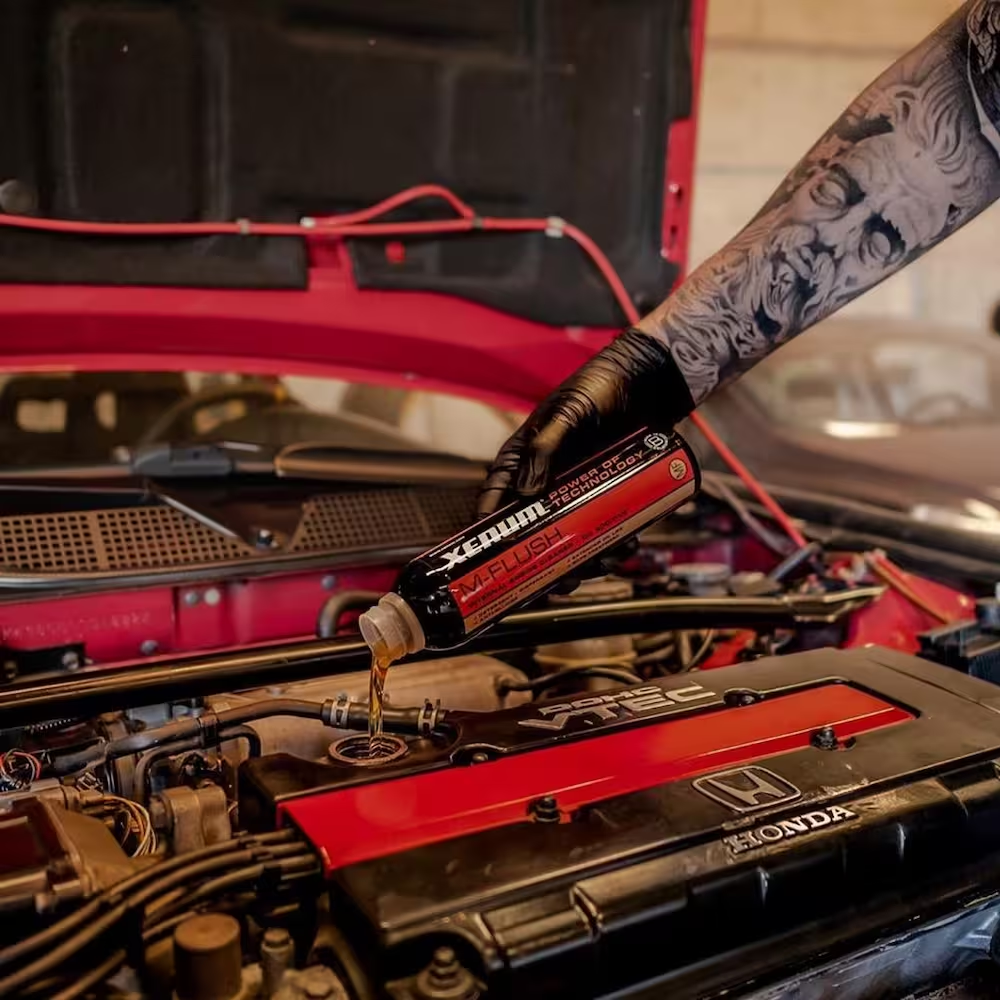
Besides VX500, Xenum offers a broad selection of other oil additives: those with micro‑ceramic particles on a more budget‑friendly synthetic base, graphite and molybdenum disulfide additives for both engines and separately for gearboxes, additives for worn engines, various sealants, and an acid‑free flush.
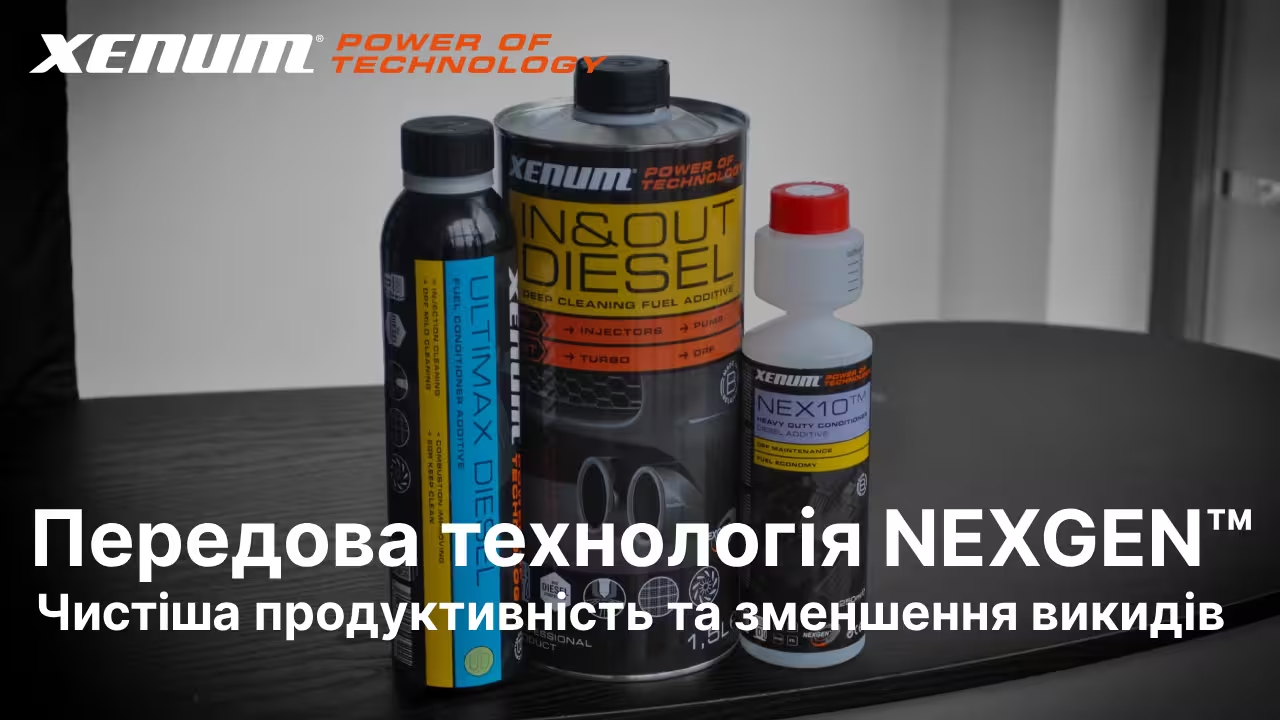
At the same time there is a large selection of fuel additives. They can be roughly divided into two groups. The first are multifunctional additives that provide preventive action with a modest cleaning effect. These additives help overcome deposits in injectors and the fuel system, lubricate moving parts and valves, protect components from corrosion, and normalize fuel consumption.
Such additives also help increase octane and cetane numbers and neutralize water when low‑quality fuel is used. The second group consists of purpose‑specific additives: for cleaning diesel exhaust systems of deposits, normalizing CO in exhaust gases, anti‑gel, anti‑diesel‑knock additives. Some additives are unique in their class. Xenum also offers injector cleaners, cooling system cleaners, various sealants, and other automotive chemistry formulations.
In special consistent greases, various cleaners, and multifunctional sprays used in auto service, Xenum employs a unique technology of adding micro‑ceramic to fluoropolymers called Cerflon. A fluoropolymer is a carbon‑fluorine compound, one of the strongest chemical bonds known today. Consequently, fluoropolymers are used in many industrial sectors, including widely used fluoropolymer dental fillings. Using a fluoropolymer together with nitride‑boron allows the coating to remain on the surface for a long time, providing extreme lubrication of parts.
Unique systems for cleaning the air intake of diesel engines and lubricating the valves of gas‑powered engines also deserve special attention. The first allows cleaning carbon and oil deposits from the diesel intake manifold without removal or disassembly, cleans valves and valve seats, the combustion chamber, and piston rings. As a result, fuel consumption drops, engine operation becomes smoother, and power is restored. The second cleaning system aids in preventing and removing deposits and ensures proper operation of valves in engines running on propane‑butane or methane. The cleaning system is safe for vehicles equipped with catalytic converters and lambda sensors. Both systems, like many other illustrated samples, have no analogues in their class.
For reference: Currently, the development and production of additive packages for engine oils are concentrated in four companies: Lubrizol, Infineum, Shell‑Additive, and Shevron‑Oronite. These companies formulate all engine oil recipes worldwide, organize their testing and obtain the necessary approvals, and subsequently sell production licenses to oil‑blending companies. These four firms are the suppliers of additives for all oil manufacturers, including international oil corporations.
In the harshest competitive environment, outsourcing is a fundamental principle used by most manufacturers and brands. This applies not only to oils but also to the production of auto parts, household appliances, computers, mobile phones, and more. For example, Apple’s well‑known products are assembled from components supplied by many manufacturers, including its direct competitors, the Korean firms LG and Samsung. It is no secret that Apple’s entire product line consists of skillfully integrated and successfully marketed external technological solutions. Yet any Apple product with the bitten‑apple logo does not provoke complaints about quality or technical specifications; on the contrary, it incites envy among competitors and admiration from consumers. Steve Jobs became a true idol and guru of a generation, adeptly leveraging others’—but always the latest and most advanced—developments.
Elite Restaurant
On the internet there are numerous debates about what Xenum does and how it does it. Many experienced motorists, athletes and service professionals are accustomed to trusting products that have proven themselves, and they view novelty with caution. Especially when that novelty lies not only in technology and formulas but also in the business model. However, if you set out to find stories about ruined engines posted by angry car owners who believed in Xenum, you will discover that none exist. This means that regardless of how the oil color surprises us, the company’s market‑entry approach and the lack of its own production, Xenum’s technologies truly work and are winning over enthusiasts among owners of extraordinary cars. The Xenum enthusiasts club is gaining momentum.